Every business owner in Nepal eventually asks the same question: "How much does a website cost?" And if you've ever asked a developer, you've probably heard the frustrating answer — "it depends."
Well, in this guide, we're going to unpack exactly what it depends on — with real numbers for 2026. By the end, you'll know what to expect, what to watch out for, and how to get the best value for your budget.
Why Every Website Has a Different Price
A website is not a product off a shelf. It's a custom-built digital tool. A simple one-page portfolio for a freelancer has completely different requirements than an e-commerce store selling to customers across Nepal. The price reflects the complexity, time, and expertise involved.
Key factors that determine the cost include: the type and size of the website, design complexity (template vs. custom), the features and functionality you need, the technology stack (WordPress, Laravel, MERN, etc.), SEO and mobile optimization, and ongoing maintenance requirements.
Website Cost in Nepal by Type (2026)
Here's a realistic breakdown of what different types of websites cost in Nepal today:
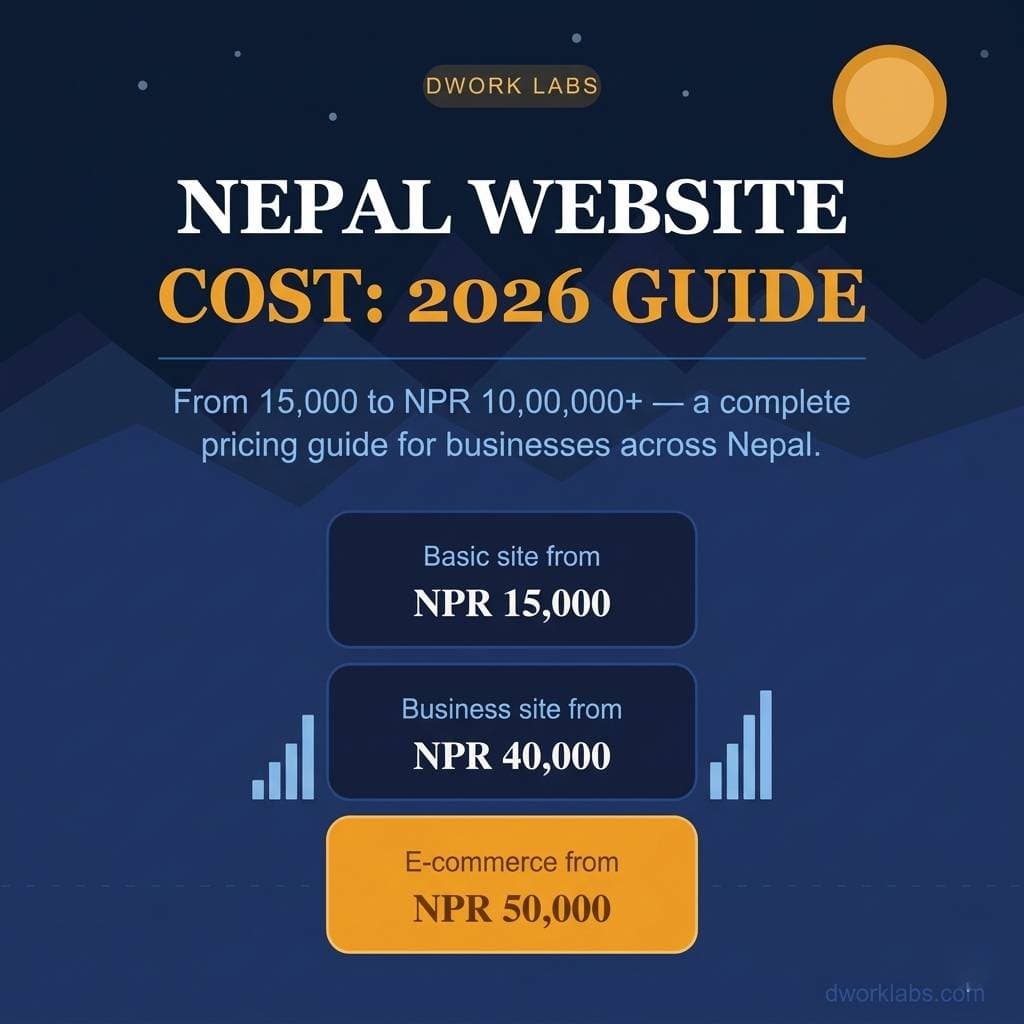
Basic / Static Website NPR 15,000 – 35,000
Business / Corporate Website NPR 35,000 – 1,00,000+
E-Commerce Website NPR 50,000 – 5,00,000+
News / Portal Website NPR 60,000 – 2,00,000+
Custom Web Application NPR 2,00,000 – 10,00,000+
Breaking Down the Full Cost
The development cost is just one piece. A complete website has several components, each with its own price tag.
Domain Name NPR 1,000 – 2,000 per year for international domains like .com. The good news: .com.np domains are free for registered Nepali businesses.
Web Hosting NPR 3,000 – 15,000+ per year depending on whether you choose shared, VPS, or dedicated hosting. Higher-traffic websites need more robust plans.
Design & Development This is the largest cost. Template-based sites using WordPress are more affordable; custom-built platforms using Laravel or MERN stack cost more but offer greater flexibility.
Annual Maintenance NPR 15,000 – 50,000+ per year. This covers updates, security scans, backups, and bug fixes. Most agencies charge 10–15% of the project cost annually.
Freelancer vs. Agency: Which Should You Choose?
This is one of the most common dilemmas for Nepali businesses. A freelance developer typically costs less and works well for smaller, well-defined projects. However, you take on more project management responsibility, and future support may be uncertain.
A web development agency brings a full team — designers, developers, SEO specialists, and project managers — under one roof. The cost is higher, but the quality, accountability, and long-term support are significantly better. For businesses that view their website as a core asset, an agency partnership almost always delivers greater ROI.
What Does a Good Website Actually Cost in Kathmandu in 2026?
For a professional business website in Kathmandu — one that looks modern, loads fast, is mobile-friendly, and has basic SEO built in — you should realistically budget between NPR 40,000 and NPR 1,00,000 for the initial build. Add NPR 5,000–15,000 per year for hosting and NPR 15,000–30,000 annually for maintenance.
Many businesses in Nepal try to cut costs by going for the cheapest option available. This is often a false economy — a poorly built website damages your brand, ranks poorly on Google, and often needs to be rebuilt entirely within a year or two.
Questions to Ask Before Hiring a Web Developer in Nepal
Before you sign any contract, make sure you ask: Does the quoted price include hosting and domain? Who owns the website files and code after delivery? Is the design custom or template-based? Does it include basic SEO setup? What does post-launch support cost? How long will the build take?
Getting clear answers to these questions upfront will save you from unpleasant surprises down the road.
Final Thoughts
In 2026, a professional website in Nepal can cost anywhere from NPR 15,000 for a basic static site to NPR 10,00,000+ for a fully custom platform. The right budget depends entirely on your business goals, target audience, and how central your website is to your operations.
Don't think of a website as an expense — think of it as your most hardworking employee. It's online 24/7, speaks to customers while you sleep, and represents your brand to the entire world. Invest accordingly.