The Real Cost of Manual Patient Records
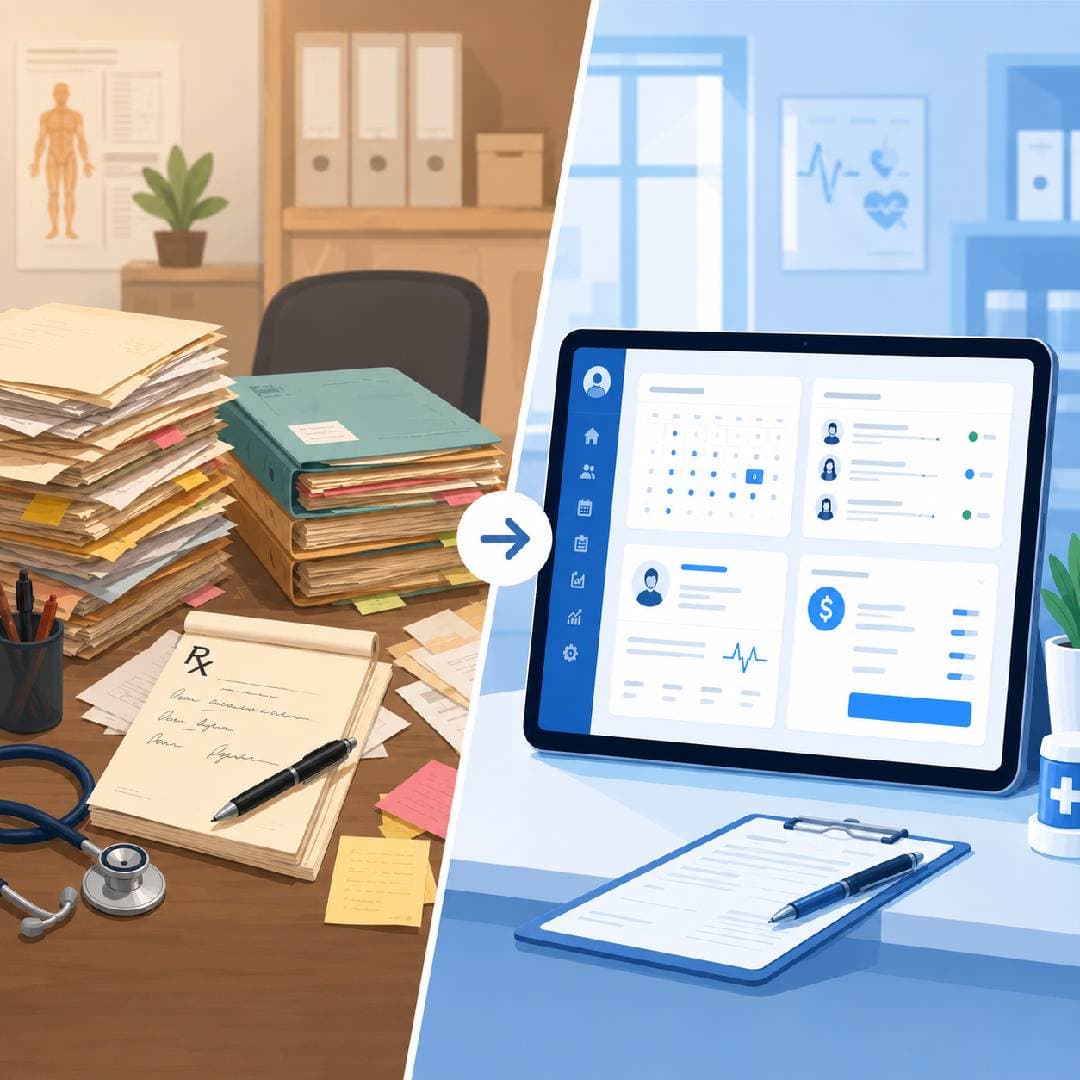
Paper-based systems feel free because there's no software subscription attached to them. But the actual cost shows up in three places:
Staff time. Someone has to write, file, and later search through paper records by hand. For a clinic seeing 20–30 patients a day, that's hours of administrative work every week that isn't going toward patient care.
Errors. Illegible handwriting on prescriptions, missed appointment slots from double-booked registers, and billing mistakes from manual calculations are common — and each one risks patient trust.
Lost information. Paper files get misplaced, damaged, or simply don't travel with the patient if they see a specialist elsewhere. A patient's medical history should be searchable in seconds, not buried in a filing cabinet.
None of this is a reflection on how a clinic is run. It's simply what happens when a growing patient base outpaces a paper system that was never built to scale.
What Changes with D. Clinic
D. Clinic is a multi-tenant clinic management system built specifically for how clinics in Nepal operate — appointments, electronic health records (EHR), prescriptions, and NPR billing, all in one dashboard.
Appointments. Patients can be booked, rescheduled, or checked in without a paper register, and staff can see the full day's schedule at a glance instead of flipping through pages.
Electronic Health Records. Every patient's history is searchable instantly — previous visits, prescriptions, and test results are pulled up in seconds rather than requiring a manual file search.
Prescriptions. Digital prescriptions remove the handwriting-legibility problem entirely and keep a permanent, accurate record tied to each patient.
Billing. NPR billing is built in, so invoices are generated automatically instead of calculated by hand — reducing the small errors that add up over a month.
Pharmacy and Lab modules. For clinics that also manage a pharmacy or run lab tests, D. Clinic includes role-scoped dashboards for pharmacists and lab technicians, a point-of-sale screen for the pharmacy counter, a test catalogue, and printable lab reports — so the clinic doesn't need a separate system to manage those functions.
Manual vs. D. Clinic: What Actually Changes Day to Day
Booking an appointment. With paper, it's a register and a pen — and double-bookings happen more often than clinics like to admit. With D.Clinic, staff see real-time availability on a screen, so two patients never end up booked for the same slot.
Finding a patient's history. On paper, it means pulling a physical file and flipping through pages. With D. Clinic, a patient's full history comes up in seconds with a quick search.
Writing a prescription. Handwritten prescriptions are fast but often hard to read, and pharmacies sometimes call back to confirm what was written. D. Clinic prescriptions are typed, always legible, and saved automatically to the patient's record.
Billing a patient. Manual billing means calculating totals by hand and keeping a paper receipt book. D. Clinic generates the invoice automatically in NPR, cutting down on small arithmetic errors that add up over a month.
Running the pharmacy counter. Many clinics track pharmacy stock separately, often by hand. D.Clinic's built-in point-of-sale and inventory tools keep pharmacy sales and stock levels in the same system as patient records.
Handling lab reports. Manual lab reports mean entering results by hand and printing them one at a time. D. Clinic's lab module keeps a digital test catalogue and generates printable reports directly from the system.
Staff time. This is where it adds up. A clinic seeing 20–30 patients a day can easily lose several hours of staff time daily to paperwork. Most of that time is freed up once records, billing, and prescriptions move into one dashboard.
What D. Clinic Costs
D. Clinic is priced at NPR 1,000/month or NPR 10,000/year — designed to be accessible for small and mid-sized clinics across Nepal, not just larger hospital groups. For most clinics, the time saved on administrative work alone covers the subscription cost within the first few weeks.
Is This a Big Change for Your Clinic?
Not as much as it might seem. D. Clinic is built to be usable by clinic staff without a technical background, and the transition from paper to digital doesn't have to happen all at once — most clinics start with appointments and billing, then move records and prescriptions over as staff get comfortable with the dashboard.
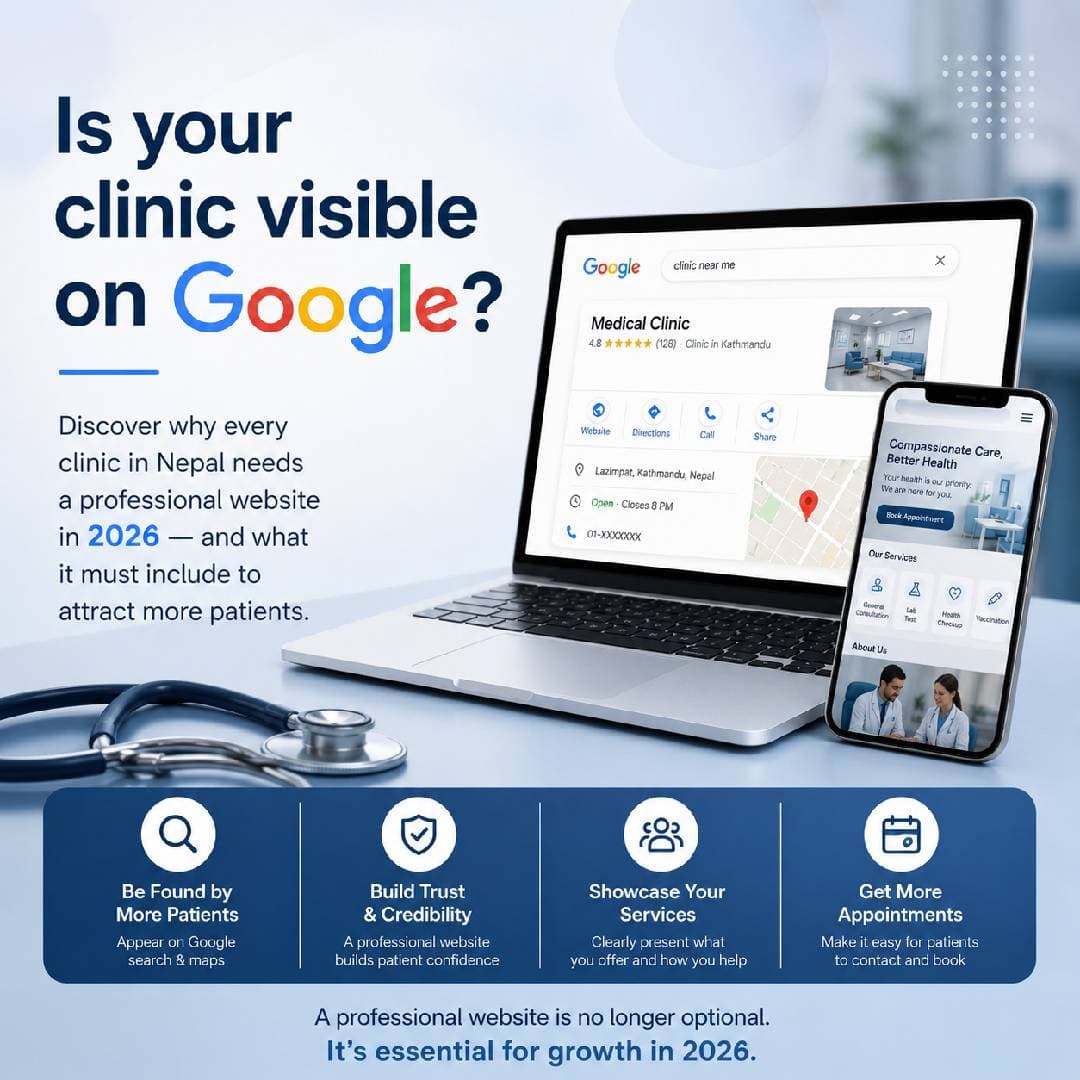
If you're still deciding whether your clinic needs a website at all before considering a management system, that's worth working through first — read our guide on why every clinic in Nepal needs a professional website in 2026.
Frequently Asked Questions
Is D. Clinic difficult to set up for a small clinic? No. D. Clinic is designed for clinics of all sizes, including solo practitioners and small teams. Most clinics are up and running within a day, and our team assists with the initial setup.
Does D. Clinic work without a stable internet connection? D. Clinic is a cloud-based system, so it requires an internet connection to access the dashboard. This is what allows records to be updated and searched in real time across staff and locations.
Can D. Clinic handle both pharmacy and lab operations? Yes. D. Clinic includes dedicated modules for pharmacy point-of-sale and inventory, as well as lab test cataloguing and report generation, so clinics don't need separate software for these functions.
How much does D. Clinic cost? D. Clinic is priced at NPR 1,000 per month, or NPR 10,000 per year for clinics that prefer annual billing.
Do I need a website before I get D. Clinic? Not necessarily — the two solve different problems. A website helps patients find and trust your clinic online. D. Clinic manages what happens once they book an appointment. Many clinics benefit from having both.